

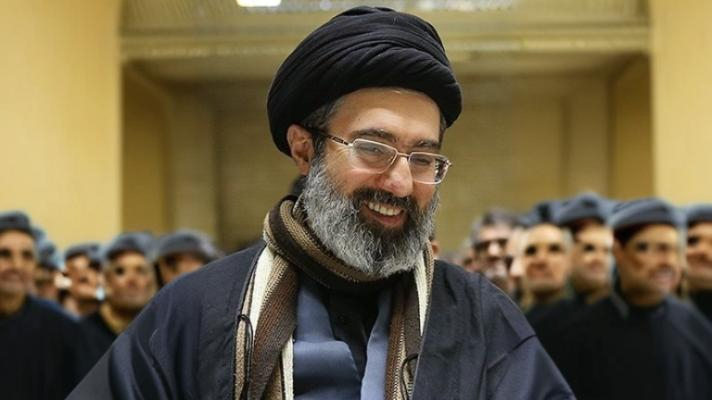
TEHRAN — Iran’s state media said Mojtaba Khamenei has been chosen as the country’s new supreme leader, replacing his father, Ali Khamenei, who was reportedly killed in a joint United States and Israeli strike on Feb. 28.
The powerful Assembly of Experts, an 88-member clerical body responsible for appointing the supreme leader, said in a statement that Mojtaba Khamenei was selected following what it described as a “decisive vote.”
The body called on Iranians — particularly scholars and clerics — to maintain national unity and pledge loyalty to the new leadership.
Mojtaba Khamenei, 56, a conservative cleric long considered influential behind the scenes, has never held elected office but has wielded significant influence in Iranian political circles due to his close proximity to his father.
Born on Sept. 8, 1969, in the northeastern city of Mashhad, he is the second of six children of the late supreme leader.
Analysts say Mojtaba has maintained deep ties with the Islamic Revolutionary Guard Corps (IRGC), relationships that reportedly date back to the Iran–Iraq War in the 1980s, when he was linked to the Habib Brigade.
Despite holding no formal government position, observers have long viewed him as an influential figure within key Iranian security and intelligence institutions.
Reports said the Feb. 28 strike in Tehran killed not only Ali Khamenei but also his wife and one of his daughters. Mojtaba Khamenei survived because he was not present at the location at the time.
His selection is widely seen as a sign that Iran’s hardline faction remains firmly in control of the country’s leadership, suggesting Tehran is unlikely to pursue negotiations with Western powers in the near term.
Although the Iranian Revolution of 1979 overthrew the Pahlavi dynasty monarchy, Mojtaba’s appointment has fueled debate among critics who say the move resembles dynastic succession.
Iran’s president, government officials and military commanders welcomed the appointment and pledged loyalty to the new leader, while rallies were reported in several cities in support of the leadership change.
The new supreme leader takes office at a moment of heightened conflict, with Iran engaged in escalating hostilities with the United States and Israel. Ongoing strikes over the past two weeks have reportedly killed senior officers, ministers and thousands of civilians while damaging major military assets and economic infrastructure, including oil storage facilities and refineries.
Meanwhile, former U.S. president Donald Trump said he was not pleased with the appointment of Iran’s new leader, warning that Mojtaba Khamenei “would not last long” unless he secured approval from Washington and Israel.