

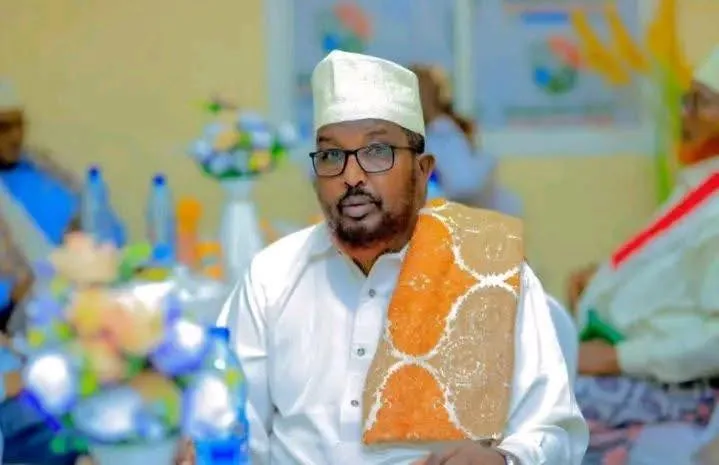
GAROWE, Somalia — His family cannot forget the day their loved one, a man devoted to peace and a trusted mediator, was killed in an instant. The village mourns deeply, grieving a life spent promoting harmony and community cohesion.
On Dec. 10, a drone strike killed Omar, a respected Somali elder known for mediating clan disputes. Three months later, Puntland’s Criminal Investigation Department released a report confirming he was unarmed, traveling alone, and on a peaceful mission.
“He was a man of peace. They killed him as if he were a criminal,” said widow Saido Ali Abdinur. “Nothing can restore him. Nothing can undo this pain.”
The report found Omar’s Suzuki pickup destroyed by missile fragments. DNA tests confirmed a single male victim, and investigators found no weapons or illegal items in the vehicle. Eyewitnesses said he died instantly.
Omar had spent his life mediating disputes and protecting communities. Local authorities described him as a pillar of peace, with no criminal record or intelligence alerts linking him to armed groups.
“I cannot understand why this happened,” said his elder brother, Ali Abdullahi Abdi. “He never touched a gun. He dedicated his life to peace. This proves our suffering was needless.”
Investigators noted local authorities had no knowledge of or role in the strike. U.S. forces were solely responsible. Forensic evidence confirmed eyewitness accounts: Omar’s vehicle was precisely hit, leaving only charred remnants.
Community leaders said the strike threatens trust in international partners. “If those who work for peace are mistaken as enemies, who will dare stand against the real threats?” said elder Mohamed Hassan.
Human rights advocates criticized the lack of transparency in targeting intelligence. “Civilian deaths like Omar’s erode trust and inflame tension. Each mistake carries a human cost,” said Ali Hussein, a regional human rights advocate.
Omar had traveled to Badhan to participate in a reconciliation meeting arranged by community leaders. Interviews with family, neighbors, and officials confirmed his peaceful mission and spotless record.
Ali Abdullahi recalled visiting the blast site. “We see his vehicle burned to ashes, his seat where he sat, gone. And yet they continue calling it a success. How can they justify this?”
Saido Ali said the report confirms the truth, but cannot bring her husband back. “It proves he was innocent, unarmed, a man of peace. And yet they took him from us.”
The strike has sparked regional protests, with elders warning that such attacks could destabilize fragile local peace and undermine trust in the fight against insurgents.
“The people of this region trusted our allies,” said Mohamed Ahmed Salad, mayor of Elbuh. “Now we fear that innocent lives can be lost again because intelligence fails to distinguish friend from foe.”
Family members have erected a memorial at the blast site, displaying a photograph of Omar beside the wreckage of his vehicle. “They thought they silenced one man,” Ali Abdullahi said. “They awakened a whole region instead.”
The report concludes that Omar Abdullahi Abdi Ibrahim was innocent, unarmed, and killed by a mistaken military operation. His death underscores the human cost of flawed targeting intelligence and the risks of errors in conflict zones.
Saido Ali pleaded for accountability. “We are not asking for revenge. We only want the world to see the truth and acknowledge the injustice done to our family.”
Community elders warned that mistakes like this could discourage others from peacebuilding. “People will hesitate to act for reconciliation if they fear death,” said Mohamed Hassan.
For Omar’s family, the pain is personal and enduring. “No report can bring him back,” Ali Abdullahi said. “But let it serve as proof that justice must include the innocent.”
Reported by Abdirisak Mohamud Tuuryare