

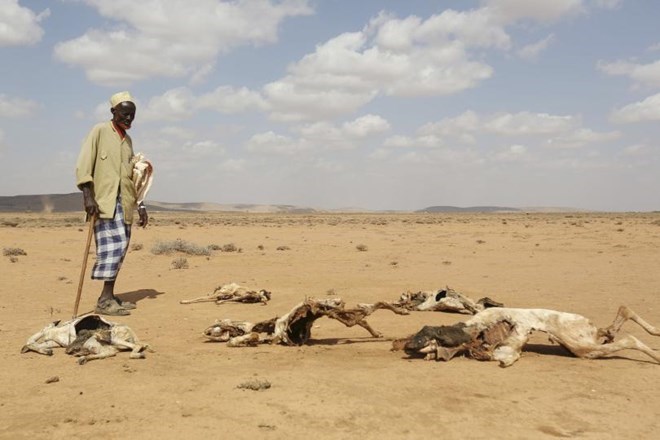
MOGADISHU, Somalia — Somalia is facing a worsening humanitarian crisis as millions struggle with hunger, repeated droughts and widespread displacement, with aid agencies warning that reduced international funding is pushing vulnerable communities closer to famine.
The United Nations Office for the Coordination of Humanitarian Affairs (OCHA) said seasonal Deyr rains that began in September worsened conditions in several parts of the country, damaging livelihoods for pastoralists and farmers and increasing displacement and food insecurity.
More than 500,000 people have been displaced inside Somalia so far this year, bringing the total number of internally displaced people to more than 3.3 million, according to OCHA.
Many displaced families have fled to camps in towns such as Baidoa and Dolow after long and difficult journeys, where they face severe shortages of food, clean water and medical care.
“Families arriving here are exhausted and have lost everything,” aid workers said, warning that children and women are among the most at risk of malnutrition and disease.
A 40-year-old woman identified as Fadumo said she had been forced to flee her home five times — three times because of conflict and twice because of drought.
“We are living in very difficult conditions. Every time we try to rebuild, another crisis forces us to leave again,” she said.
Humanitarian assistance in Somalia has sharply declined, with only 14 percent of the requested funding secured this year, OCHA said.
Reports also indicate that Somalia has been left out of major international funding allocations, further limiting access to emergency relief for those in urgent need.
Although the Gu rainy season has now started, aid officials say its impact remains limited compared to the destruction caused by consecutive droughts, leaving many communities still dependent on humanitarian support.
U.N. humanitarian chief Tom Fletcher said regional instability and global conflicts were also indirectly affecting Somalia’s humanitarian situation, noting that declining aid budgets had worsened food shortages and weakened access to healthcare services.
He called for urgent international support to prevent further suffering and save the lives of the country’s most vulnerable people.