

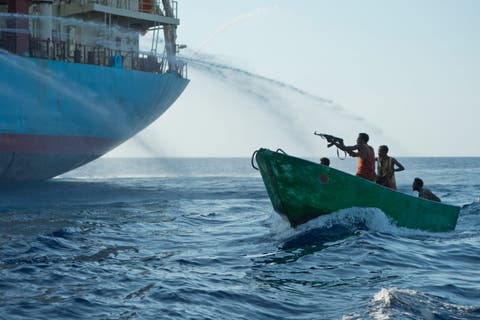
Somali piracy has mounted a devastating 2026 comeback in the Horn of Africa, holding the Eureka tanker for a USD 10 million ransom amid Red Sea chaos.
After a decade of relative calm, heavily armed Somali pirates are orchestrating a devastating resurgence across the Horn of Africa in 2026, launching brazen hijackings on commercial shipping and holding foreign-flagged oil tankers for massive ransoms.
The rapid deterioration of maritime security in the Indian Ocean is directly linked to the ongoing geopolitical chaos in the Red Sea. With international naval coalitions hyper-focused on intercepting drone and missile attacks launched by Houthi militants in Yemen, a massive security vacuum has opened off the Somali coast. For the global economy, this twin threat creates an unprecedented chokehold on international trade, directly inflating import costs for consumers in East Africa, Europe, and Australia.
The High-Stakes Hijackings of 2026
The scale of the resurgence is staggering. On April 26, 2026, the Egyptian merchant vessel Sward was hijacked off the Somali coast and forcibly redirected to an anchorage near the port of Garacad in the semi-autonomous Puntland state. Just days later, on May 2, pirates successfully boarded and seized the Togo-flagged oil tanker Eureka, which was transporting Emirati diesel through the Gulf of Aden.
The hijackers currently holding the Eureka have demanded a staggering USD 10 million (KES 1.3 billion) ransom. These highly coordinated attacks are not isolated incidents; the United Kingdom Maritime Trade Operations (UKMTO) center recorded four direct attacks in April and issued eight distinct warnings in May and June. Pirates are actively hijacking ocean-going dhows to use as “motherships,” allowing them to project power hundreds of nautical miles deep into the ocean, far beyond the reach of local coastal patrols.
After a decade of relative calm, heavily armed Somali pirates are orchestrating a devastating resurgence across the Horn of Africa in 2026, launching brazen hijackings on commercial shipping and holding foreign-flagged oil tankers for massive ransoms.
The rapid deterioration of maritime security in the Indian Ocean is directly linked to the ongoing geopolitical chaos in the Red Sea. With international naval coalitions hyper-focused on intercepting drone and missile attacks launched by Houthi militants in Yemen, a massive security vacuum has opened off the Somali coast. For the global economy, this twin threat creates an unprecedented chokehold on international trade, directly inflating import costs for consumers in East Africa, Europe, and Australia.
The High-Stakes Hijackings of 2026
The scale of the resurgence is staggering. On April 26, 2026, the Egyptian merchant vessel Sward was hijacked off the Somali coast and forcibly redirected to an anchorage near the port of Garacad in the semi-autonomous Puntland state. Just days later, on May 2, pirates successfully boarded and seized the Togo-flagged oil tanker Eureka, which was transporting Emirati diesel through the Gulf of Aden.
The hijackers currently holding the Eureka have demanded a staggering USD 10 million (KES 1.3 billion) ransom. These highly coordinated attacks are not isolated incidents; the United Kingdom Maritime Trade Operations (UKMTO) center recorded four direct attacks in April and issued eight distinct warnings in May and June. Pirates are actively hijacking ocean-going dhows to use as “motherships,” allowing them to project power hundreds of nautical miles deep into the ocean, far beyond the reach of local coastal patrols.
- Vessel Eureka: Togo-flagged tanker hijacked on May 2, currently held for a USD 10 million ransom.
- Vessel Sward: Egyptian merchant vessel seized on April 26 and steered toward Puntland.
- Mothership Tactics: Use of hijacked traditional dhows to sustain prolonged deep-water raiding operations.
The Houthi-Pirate Technological Axis
Intelligence reports indicate a terrifying evolution in pirate capabilities. Authorities in Somalia’s Puntland Maritime Police Force (PMPF) warn that local pirate syndicates have established direct logistical collaborations with the Iran-backed Houthi rebels in Yemen. This relationship has facilitated the transfer of sophisticated weaponry and advanced GPS technology, allowing pirates to track commercial ships far beyond traditional operational zones.
Unlike the rudimentary skiff attacks of the 2010s, modern pirate action groups are utilizing rocket-propelled grenades (RPGs) and heavy machine guns with devastating precision. On June 15, the UKMTO reported a terrifying encounter midway between the Horn of Africa and Yemen, where armed individuals in a skiff opened sustained RPG fire on a commercial tanker, forcing the onboard private security team to engage in a prolonged firefight to prevent boarding.
The Economic Shockwave to Kenya and the Globe
The resurgence of piracy, combined with the effective closure of the Red Sea transit route by the Houthis, forces massive container ships to reroute entirely around the Cape of Good Hope in South Africa. This detour adds up to 14 days to a journey from Asia to Europe, consuming vast quantities of fuel and heavily restricting global shipping capacity.
For Kenya, the impact is severe. The Port of Mombasa relies on unhindered access to the Indian Ocean to import critical supplies, including 92 percent of the nation’s petroleum products, wheat, and fertilizer. The elevated maritime risks have triggered a massive spike in insurance premiums, specifically the War Risk Surcharges levied by maritime underwriters in London. These multimillion-dollar premium hikes are passed directly down the supply chain, inflating the cost of fuel at Nairobi pumps and basic foodstuffs in local markets.
An Overstretched International Response
During the peak of the piracy crisis between 2008 and 2013—which cost the global economy an estimated USD 18 billion—the United States Navy, the European Union’s Operation Atalanta, and NATO deployed massive armadas to suppress the threat. Today, those same navies are deeply entangled in intercepting ballistic missiles in the Red Sea and supporting operations in the Mediterranean and the Indo-Pacific.
With international forces stretched thin, the burden falls heavily on the underfunded Puntland security forces. While the PMPF has evolved into a capable unit, they are simultaneously fighting a grueling land war against ISIS-Somalia and al-Shabaab militants in the Cal Miskaad mountains. Without a rapid redeployment of global naval assets to the Somali basin, the lucrative hijack-for-ransom business model will rapidly metastasize, effectively closing one of the world’s most vital economic arteries.
Source: Streamline