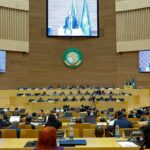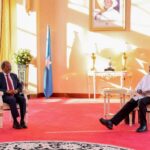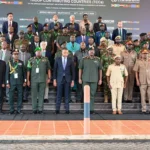


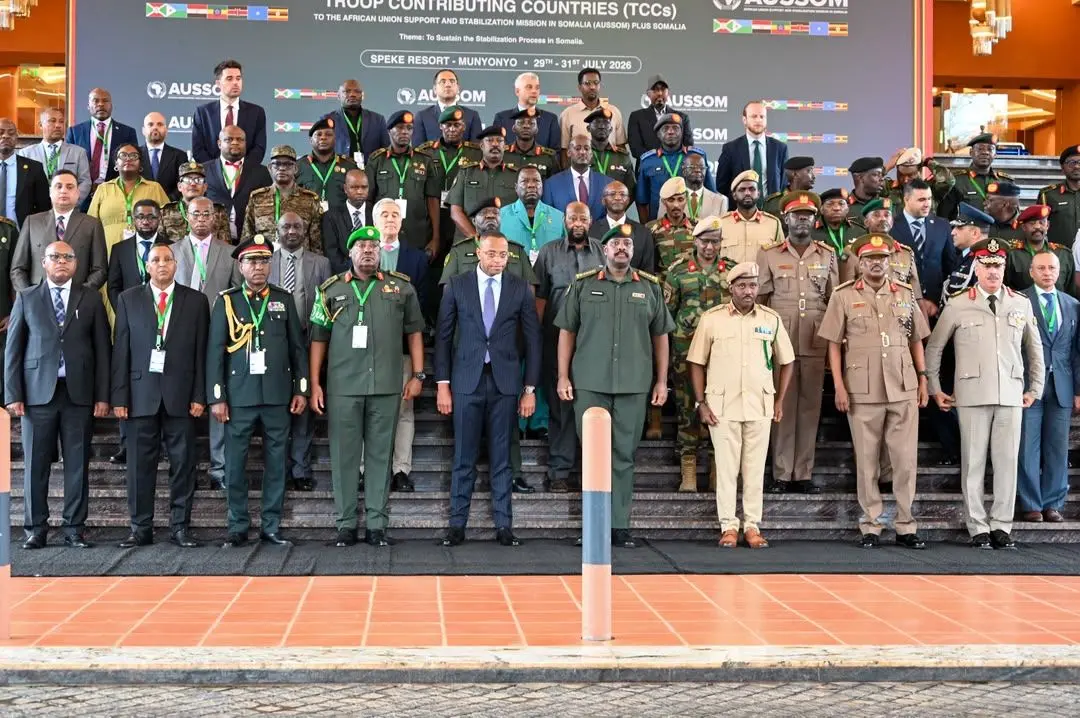
KAMPALA, Uganda – Defence ministers from countries contributing troops to the African Union Support and Stabilisation Mission in Somalia (AUSSOM) agreed on Thursday to seek a United Nations extension of the mission by up to two years, as concerns mount over the future of international security support for Somalia.
Meeting in Uganda’s capital, Kampala, ministers and senior defence officials from Burundi, Djibouti, Egypt, Ethiopia, Kenya, Somalia and Uganda endorsed a joint communiqué calling for the UN Security Council to extend AUSSOM’s mandate by 18 to 24 months.
The ministers said the extension would help prevent a security vacuum while Somalia continues building the capacity of its national security forces to gradually assume full responsibility for the country’s security.
The meeting focused on the future of AUSSOM, sustainable financing for the mission and contingency planning ahead of the expected end of U.S. support for the operation at the close of 2026.
The communiqué also stressed the need to strengthen Somalia’s security institutions, including improving the capabilities of the Somali National Army, intelligence services, air assets and logistical support to sustain operations against Al-Shabaab.
Somalia was represented by State Minister for Defence Omar Ali Abdi, who signed the communiqué on behalf of the federal government. Somali officials reiterated Mogadishu’s commitment to leading the country’s stabilisation efforts while working with regional and international partners to complete the transition of security responsibilities.
The defence ministers’ meeting served as a precursor to an extraordinary summit of heads of state and government from AUSSOM troop-contributing countries and Somalia, expected to decide on the mission’s long-term strategy, funding arrangements and the next phase of security support for Somalia.
AUSSOM replaced the African Union Transition Mission in Somalia (ATMIS) in early 2025 and is mandated to support Somali forces in combating the Al-Shabaab insurgency while assisting the country in gradually taking over security responsibilities. The mission has faced growing financial uncertainty after the United States announced it would end its support for the operation when the current funding arrangements expire at the end of 2026.