

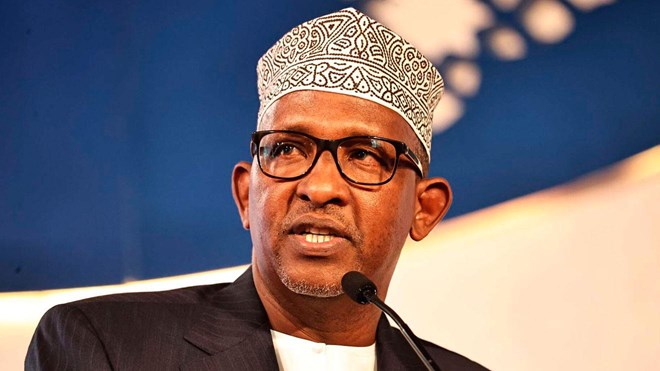
NAIROBI, Kenya – Kenya’s Health Minister, Aden Barre Duale underscored the growing influence of the Somali community both in the Horn of Africa and globally, in remarks seen as a direct response to recent anti-Somali sentiments voiced by a former deputy president.
The Somali population in the Horn of Africa is 40 million. Oromos are the largest ethnic group, but Somalis come second,” Duale said in a recent speech. “If you go to Canada, a Somali minister will receive you. In the US Congress, we are represented. But if you Google the Kikuyu tribe, they are just a dot. In Kenya, no one is a guest of another.”
The comments were widely interpreted as a rebuttal to former Deputy President William Ruto’s predecessor, who has publicly claimed that the growing Somali presence in Kenya poses a threat to the political and economic future of the Kikuyu community.
Somalis in Kenya – many of whom arrived during the 1990s following conflict in Somalia – have established strong economic roots, particularly in Nairobi and the northeastern regions. Thousands have since become naturalized citizens, running major businesses and holding positions in government.
President William Ruto has in recent months awarded housing to nearly 1,000 Somali families in Kenya, a move seen as part of his administration’s broader effort to promote integration and inclusion.
Duale’s comments come amid heightened national debate over ethnic representation and identity in Kenyan politics. His statement drew support from Somali community leaders and human rights groups, who view it as a call for national unity and recognition of Kenya’s diversity.