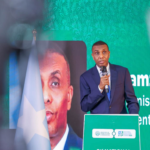


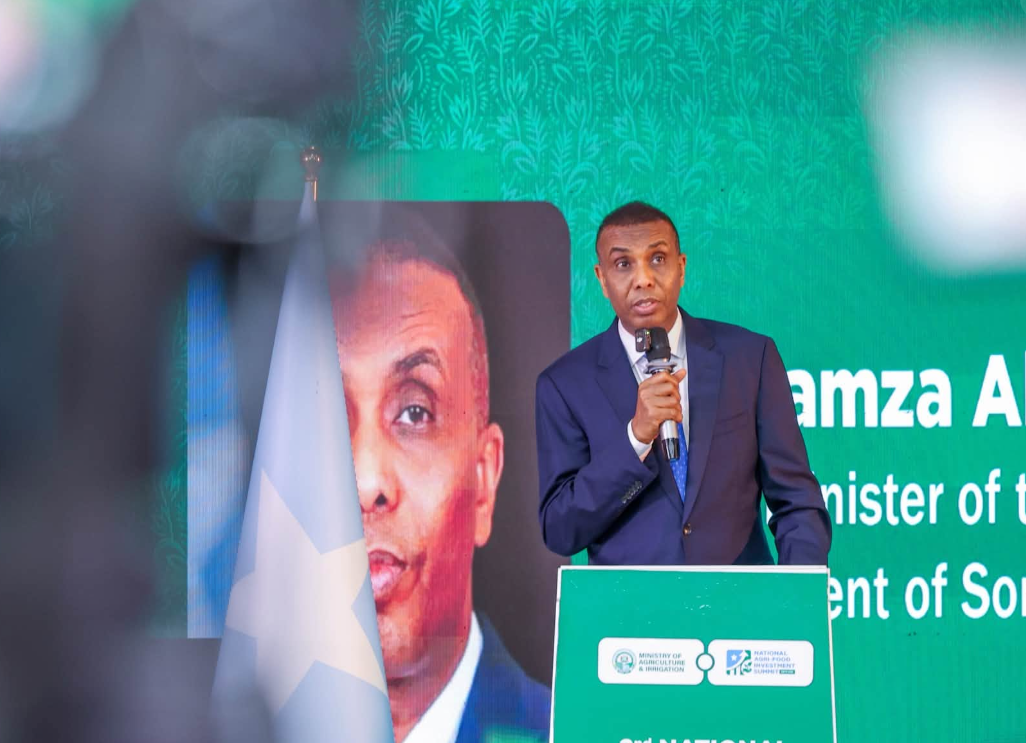
MOGADISHU, Somalia — Prime Minister Hamza Abdi Barre on Tuesday launched the National Agriculture and Food Systems Investment Forum (NAFIS 2026) in Mogadishu, signaling a strategic pivot toward domestic production as a cornerstone of Somalia’s economic recovery.
Addressing delegates at the summit, Prime Minister Barre emphasized that the government’s “National Transformation Plan” (NTP) is shifting the country’s focus from humanitarian reliance to sustainable, self-sufficient food systems.
“I am confident that investment in agriculture and food systems is vital for our country and the Horn of Africa at large,” Barre said. “Boosting our domestic output will stimulate the national economy, strengthen regional development infrastructure, and provide essential opportunities for Somali youth.”
Somalia possesses vast tracts of arable land and significant water resources that remain largely underutilized. The Prime Minister noted that the current administration is prioritizing these assets to reduce chronic food insecurity and move the nation toward self-reliance.
During the event, Barre issued a pointed call to international agencies and stakeholders operating within the country, urging them to align their operations with the government’s new development trajectory.
“Agencies operating in our country must recognize that Somalia is not what it used to be,” the Prime Minister stated. “The government has implemented fundamental changes to its national plans, and it is crucial that partners work in tandem with our vision for a ‘new Somalia’—one defined by state-led development and institutional maturity.”
NAFIS 2026 serves as a platform to bridge the gap between local producers and private investors, aiming to modernize farming techniques and improve supply chain logistics. The forum is part of a broader government effort to revitalize the agricultural sector, which historically accounted for the majority of the nation’s GDP before decades of conflict and climate-related shocks.
Government officials highlighted that this summit marks a departure from short-term emergency aid models, focusing instead on long-term capital investment and technology transfers intended to make Somali agriculture competitive within the East African market.