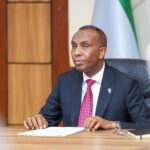


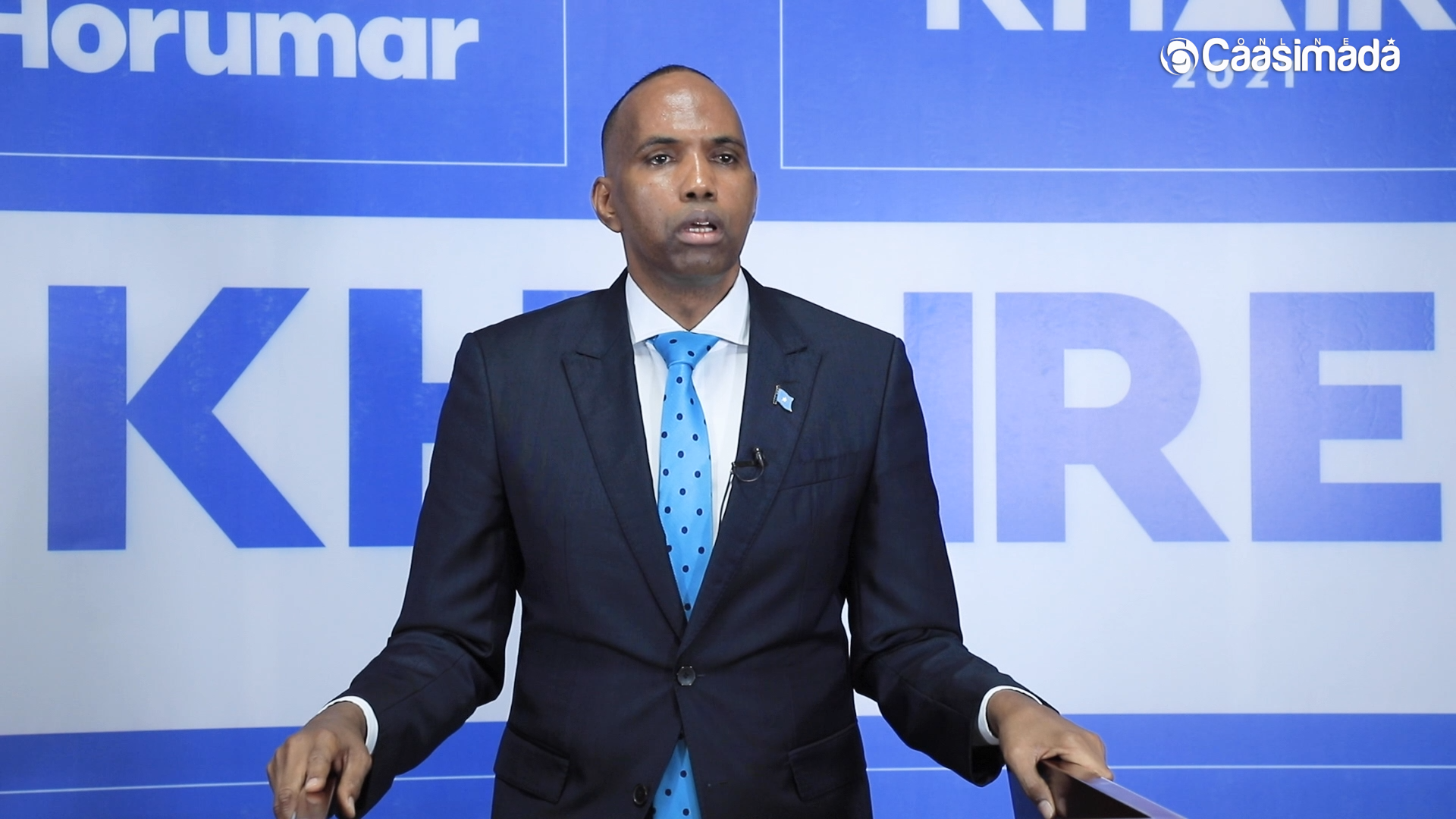
MOGADISHU, Somalia — Former Somali prime minister Hassan Ali Khaire has sharply criticised the country’s economic and social conditions, accusing the government of presiding over a significant decline since President Hassan Sheikh Mohamud came to power more than four years ago.
Speaking at a press conference in Mogadishu, Khaire said information available to him showed a major deterioration in economic growth, household purchasing power and business profitability during the period following the presidential election.
He also claimed that unemployment, inflation, poverty and the number of internally displaced people had increased substantially during the same period.
Khaire, who served as prime minister from 2017 to 2020, accused the current administration, which he referred to as a “regime”, of exploiting the country’s difficulties for its own benefit.
He alleged that the government had strengthened its position through what he described as the depletion of national resources and the illegal appropriation of public land.
“The country has experienced economic and social decline,” Khaire said, without providing detailed figures or identifying the sources of the data he cited.
His remarks amount to a broad political challenge to Hassan Sheikh’s administration, which has sought to highlight progress in economic reforms, debt relief and the expansion of government revenues while continuing to face major security and humanitarian challenges.
Somalia has made significant progress in securing international debt relief and restructuring its public finances in recent years, but poverty, unemployment and displacement remain major challenges.
The country continues to rely heavily on international assistance, while conflict, climate shocks and limited employment opportunities have placed pressure on households and businesses.
Khaire’s comments come as Somalia’s political environment remains increasingly competitive, with opposition figures stepping up criticism of the federal government ahead of expected political developments and elections.
The former prime minister did not outline specific policy measures he would pursue to address the economic and social problems he identified, but his remarks focused on what he described as failures in the government’s management of public resources.
The government has not immediately issued a response to Khaire’s accusations.
Khaire, who remains a prominent political figure, has previously criticised the federal government over its political and security policies. His latest remarks are likely to add to growing debate over the country’s economic performance, governance and management of public assets.