


New Delhi: India on Friday (January 9) strongly backed Somalia’s sovereignty and territorial integrity following Israel’s recognition of the breakaway region of Somaliland, while adopting a notably restrained position on rising tensions over Greenland amid increasingly forceful rhetoric from the United States.
“India has longstanding ties with Somalia. We continue to underline the importance of respecting sovereignty and territorial integrity of the country,” the Ministry of External Affairs (MEA)’s spokesperson stated when asked about the recognition of Somaliland.
The statement came after Israel became the first United Nations member state to formally recognise Somaliland as independent on December 26.
Somaliland, a self-declared republic in the Horn of Africa, broke away from Somalia in 1991 after the collapse of the central government and the outbreak of civil war. Despite maintaining its own administration, currency and armed forces and holding periodic elections for more than three decades, it remained internationally unrecognised until Israel’s move last month.
The African Union, the Organisation of Islamic Cooperation and the European Union have reiterated that Somalia’s territorial integrity should be respected. International concerns have grown over allegations that Israel’s recognition was linked to strategic considerations, including Somaliland’s proximity to the Red Sea and Yemen’s Houthi-controlled territory.
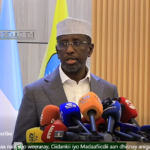
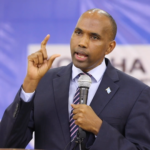
Somalia’s President Hassan Sheikh Mohamud has alleged that Somaliland agreed to host Israeli military facilities along the Gulf of Aden and resettle displaced Palestinians from Gaza in exchange for recognition. Somaliland’s Ministry of Foreign Affairs denied these claims, stating its engagement with Israel was “purely diplomatic” and conducted “in full respect of international law”.
India’s position on Somaliland reflects broader strategic interests in the Horn of Africa and the Indian Ocean Region. According to the Indian high commission in Nairobi, which oversees relations with Somalia, India has provided development, capacity-building and humanitarian assistance to Somalia over the years.
The two nations have cooperated on maritime security issues, particularly concerning piracy in the waters off Somalia’s coast, which directly impacts Indian commercial shipping lanes. India has also been involved in training Somali security personnel and has extended lines of credit for development projects.
New Delhi’s unequivocal backing of Somali sovereignty stands in contrast to its otherwise close relationship with Israel.
India had to debunk fake news earlier this month when viral social media posts falsely claimed Prime Minister Narendra Modi had held talks with Somaliland’s leadership and was preparing to recognise the breakaway region. The MEA FactCheck unit called the posts fake and urged vigilance against misinformation.
In stark contrast to its forthright position on Somaliland, India’s response to the Greenland situation has been subdued. “We have seen on the Greenland part, we have seen the recent media reports in this regard. We are closely following the developments,” the MEA spokesperson said when asked about US President Donald Trump’s repeated assertions about acquiring Greenland.
The White House has stated that “all options” are on the table for acquiring Greenland, with press secretary Karoline Leavitt saying Trump isn’t ruling out any options though diplomacy is his “first option”.
Trump has asserted that the US needs Greenland for national security purposes, pointing to Russian and Chinese activities in the region. The president told reporters that Greenland is covered with Russian and Chinese ships and that Denmark cannot adequately secure it.
The leaders of Denmark, France, Germany, Italy, Poland, Spain and the UK issued a joint statement defending Greenland’s sovereignty, saying it “belongs to its people” and that “it is for Denmark and Greenland, and them only, to decide on matters concerning Denmark and Greenland”.
Danish Prime Minister Mette Frederiksen has warned that any US attack on Greenland would spell the end of NATO and post-World War II security arrangements. She stated that if the US decides to attack another NATO country, “then everything would stop – that includes NATO and therefore post-World War II security”.