


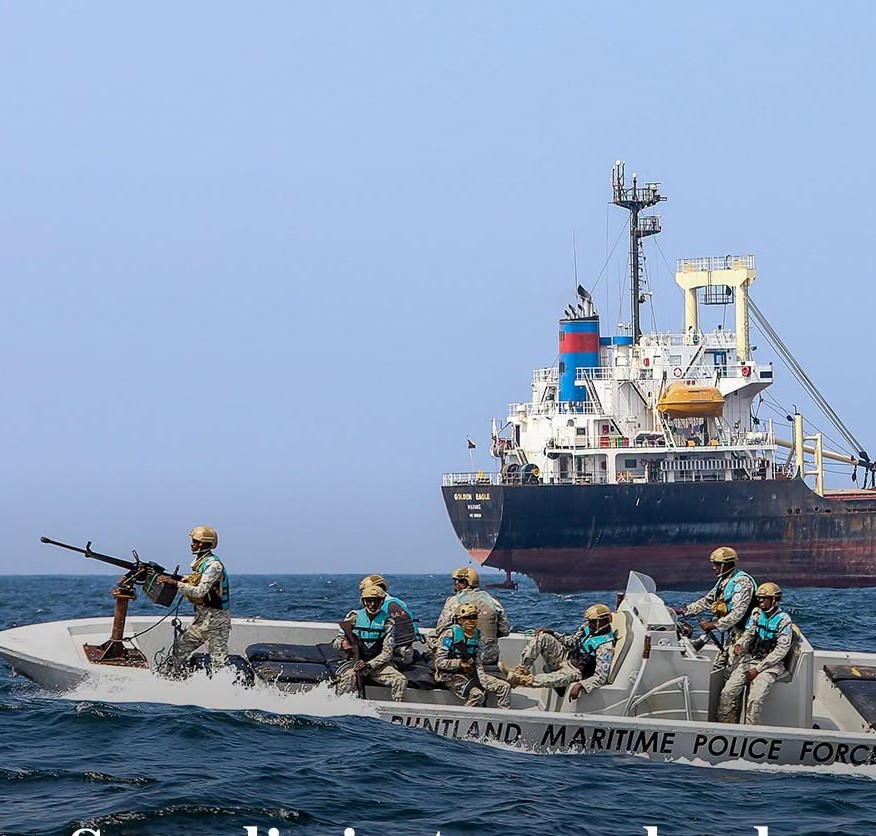
Mogadishu – Somali pirates have once again stepped up attacks on commercial vessels traversing the waters off Somalia and the Gulf of Aden; international reports suggest that the conflict between the United States and Iran has indirectly created an opportunity for these groups to regain strength.
A report published by The Telegraph states that pirates are now employing the “mothership” tactic, which enables them to launch attacks far from the Somali coast. This strategy was widely used during the peak of piracy activity between 2008 and 2012.
Pirate groups reportedly converted the cargo vessel MV Sward hijacked in April into a base for orchestrating new attacks. Using this vessel, they hijacked two Iranian fishing boats on July 16.
Officials from the Puntland administration stated that, over the past week, at least six hijacked vessels were being held off the region’s coast, including the MV Sward, MT Asana, Honour 25, MT Eureka, and the two Iranian fishing boats. Although the two Iranian boats were released following the payment of a reported ransom of $20,000 each, other vessels remain in the hands of pirates.
The report notes that the resurgence of piracy is partly linked to shifts in international naval operations. Many naval vessels have been redeployed to the Red Sea and the Persian Gulf to address escalating tensions between the United States and Iran, as well as Houthi attacks on commercial shipping. This shift has led to a reduction in regular patrols off the coast of Somalia, providing pirates with an opportunity to organize new attacks.
Furthermore, the report indicates that pirate groups continue to receive support from certain communities along the coast of Puntland, complicating efforts to end hijackings and bring perpetrators to justice. Coastal towns in the Mudug region particularly areas near Garacad, Kulule, and Ceel-Dhanaane have been identified as major hubs for pirate operations.
The report also notes that a pirate leader was arrested following the hijacking of the MV Sward, but armed men attacked a police station in Garacad to free him. That attack resulted in the death of one police officer and the injury of another; the suspect was subsequently transferred to Garowe for security reasons.
Maritime security experts warn that unless international maritime patrols and cooperation among regional governments are strengthened, piracy could return to the dangerous levels seen over the past decade. Meanwhile, Somali fishermen have long complained about illegal fishing by foreign vessels, particularly those from Iran, Yemen, Pakistan, India, Thailand, and China. Experts believe that this economic situation and the lack of coastal security are among the factors fueling the resurgence of piracy in Somalia.