

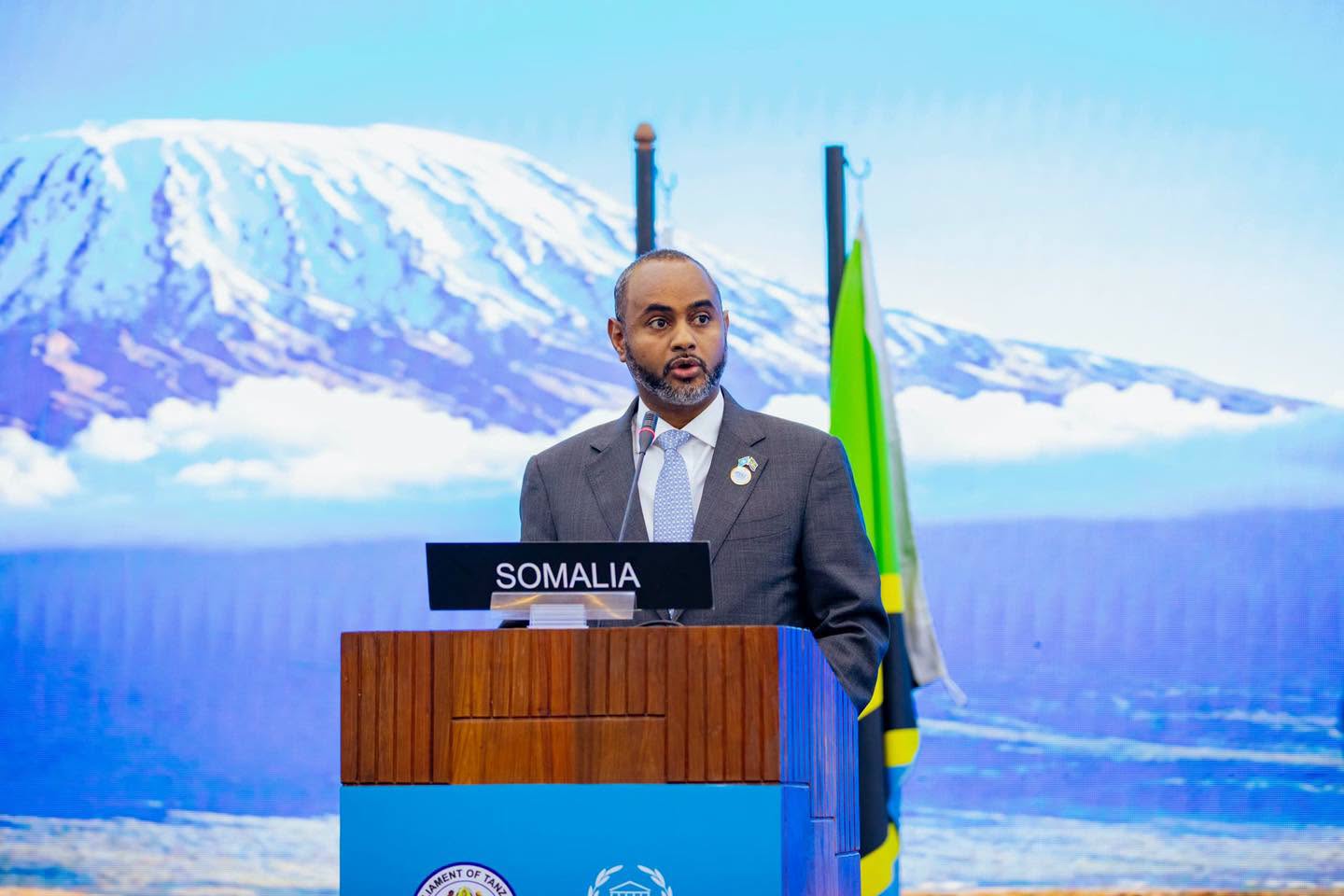
ARUSHA, Tanzania — Somalia’s parliamentary speaker Abdulkadir Mohamed Nur on Tuesday highlighted the country’s democratic transition and called for stronger parliamentary institutions and political dialogue during the 153rd Assembly of the Inter-Parliamentary Union (IPU) in Tanzania.
Nur, popularly known as Jama, addressed the conference after it formally opened in the northern Tanzanian city of Arusha, thanking the Tanzanian government and people for hosting the gathering and welcoming delegations from around the world.
In his speech, Nur outlined Somalia’s vision for building an independent, transparent and inclusive parliament that is accessible to citizens and plays a central role in state-building, democratic development and strengthening government accountability.
He said Somalia had made progress in its democratic process, particularly through the introduction of direct elections at the local level.
Nur pointed to direct local elections held in the capital Mogadishu as well as in the South West, Hirshabelle and Galmudug states, saying electoral processes were continuing in other parts of the country.
He said strengthening state institutions, political dialogue and public participation should remain among Somalia’s priorities as the country seeks to consolidate its democratic system.
“Parliament must be an institution that protects the interests of the Somali people, strengthens public confidence in national institutions and holds the government accountable,” Nur said, according to a statement issued after his address.
He said such efforts could contribute to building a peaceful, developed and prosperous Somalia, while emphasising the importance of cooperation among parliaments around the world.
The IPU assembly brings together parliamentarians from across the globe to discuss issues affecting democratic governance, international cooperation and the role of legislatures in addressing global challenges.
Nur’s participation comes as Somalia continues to navigate a politically sensitive transition, with debates over elections, constitutional reforms and the strengthening of federal institutions remaining central to the country’s political agenda.