

ANTALYA, Türkiye — Somalia has shared its experience with drought insurance and emergency response financing at a high-level meeting on disaster preparedness and climate resilience held on the sidelines of the COP31 climate summit in Antalya.
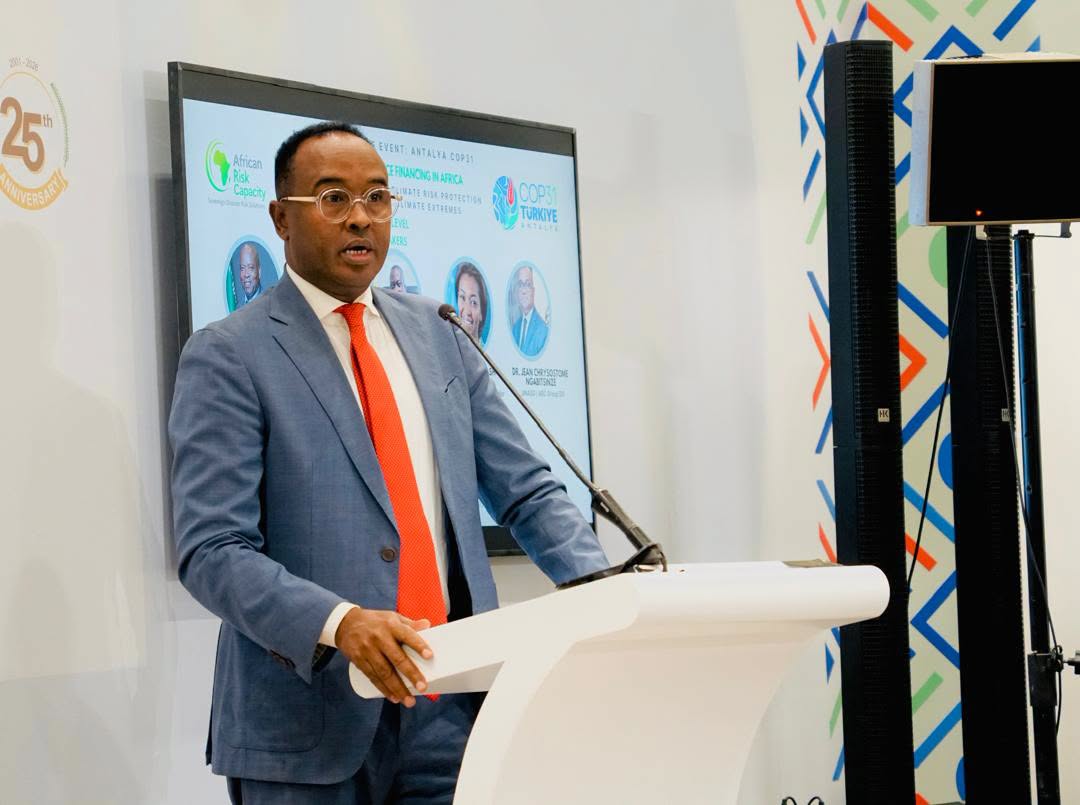
Mahmoud Moallim Abdulle, chairman of the Somali Disaster Management Agency (SoDMA), attended the special meeting organised by the African Risk Capacity (ARC) at the African Union Pavilion, where participants discussed ways to strengthen disaster risk financing and preparedness across Africa.
The discussions focused on expanding investment in disaster preparedness, improving early action mechanisms and protecting vulnerable communities from the growing impact of natural disasters.
During the meeting, Abdulle presented Somalia’s experience with ARC’s drought insurance programme, outlining its benefits and lessons learned from efforts to finance emergency responses, particularly during droughts that affected the country over the past two years.
He also shared Somalia’s experience in strengthening disaster preparedness and securing rapid financing to support communities affected by drought and other humanitarian emergencies.
The discussions provided an opportunity for African countries and regional institutions to exchange experiences on developing more effective mechanisms to anticipate and respond to climate-related disasters.
Participants included Guinea’s Minister of Environment and Sustainable Development, senior officials from the African Union, the director-general of the African Risk Capacity and other representatives.
SoDMA said Somalia’s participation was part of broader efforts to strengthen international cooperation, exchange expertise and improve national systems for preparing for and responding to natural disasters.
The African Risk Capacity is a specialised agency of the African Union that helps member states strengthen their capacity to plan for and respond to extreme weather events and natural disasters through risk assessment, insurance and financial protection mechanisms.
Somalia remains highly vulnerable to climate-related shocks, particularly recurrent droughts and floods, which have displaced communities, disrupted livelihoods and increased humanitarian needs across the country.
The government has increasingly sought partnerships with regional and international institutions to improve early warning systems, disaster preparedness and access to emergency funding as climate pressures continue to threaten vulnerable populations.