


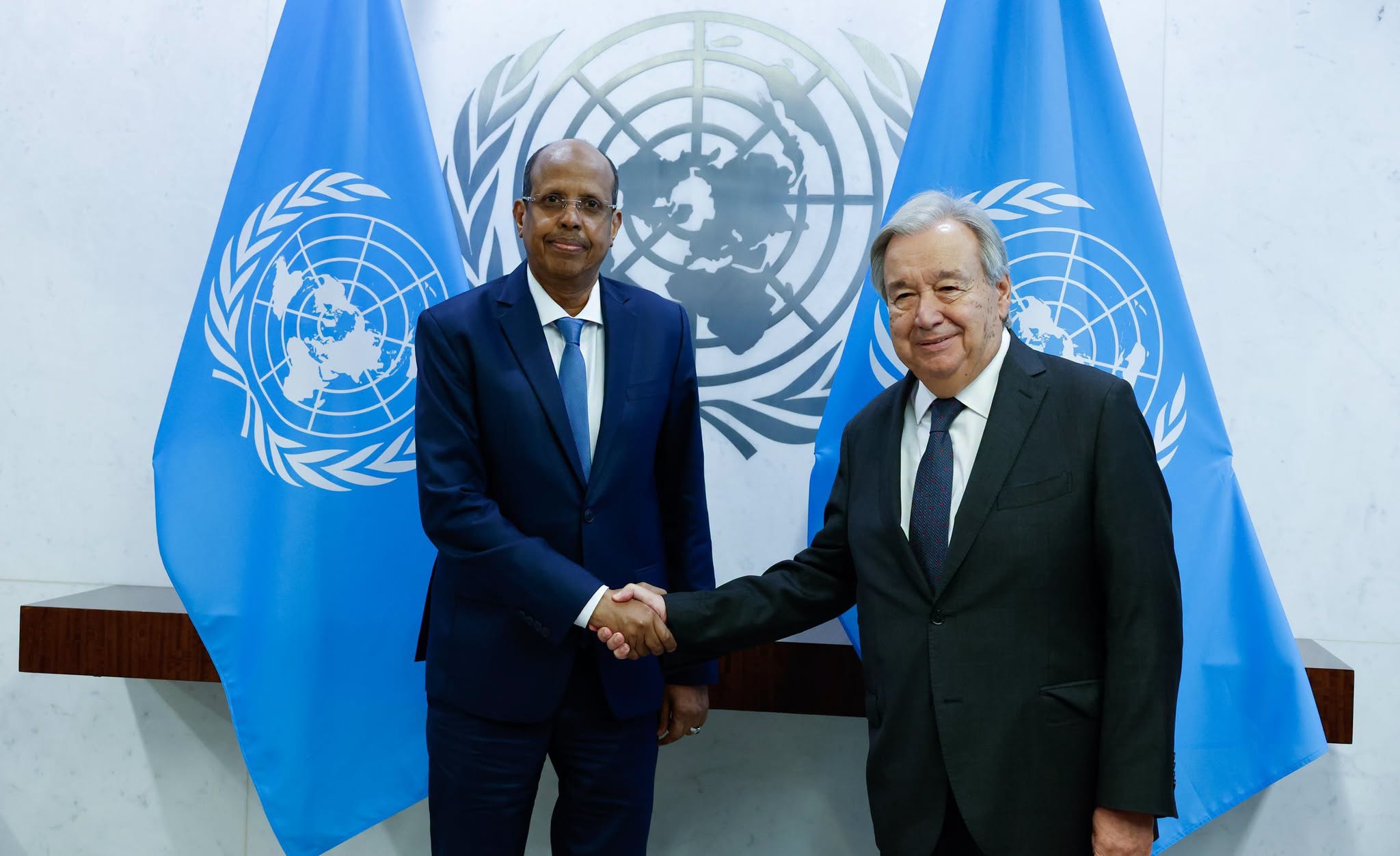
NEW YORK — African Union Commission Chairperson Mahmoud Ali Youssouf and U.N. Secretary-General Antonio Guterres co-chaired a high-level meeting between the African Union and the United Nations in New York focused on strengthening cooperation between the two organizations.
The meeting reaffirmed a shared commitment to supporting African-led efforts to address structural challenges and promote a more equitable international system. Discussions included reform of the global financial system, debt sustainability and ways for African countries to derive greater value from their critical mineral resources.
The two sides also stressed the strategic importance of AU-U.N. cooperation and the need to complete a joint framework for collaboration beyond 2026. The United Nations was described as a key partner for the African Union, particularly in addressing peace and security challenges across the continent.
On peace and security, participants called for stronger African peace and security mechanisms, greater emphasis on preventive diplomacy and mediation, and adequate resources to support African-led responses to conflicts and other crises.
The discussions covered developments in the Sahel, Libya, Sudan, South Sudan, Somalia and the Democratic Republic of Congo. The participants also highlighted continued support for mediation efforts led by Togo to address the situation in eastern Congo.
The meeting also raised concerns about external shocks affecting African economies, including conflicts, disruptions to global supply chains and instability in maritime areas. Participants said such pressures could further affect economic conditions and food security across the continent.
Climate-related events and their potential impact on Africa’s humanitarian and economic situation were also discussed, with the two sides emphasizing the need for stronger international cooperation to address the continent’s growing challenges.
The meeting came as African and U.N. officials seek to deepen coordination on peace and security, development and global economic governance, while giving greater prominence to African-led initiatives in addressing crises on the continent.