


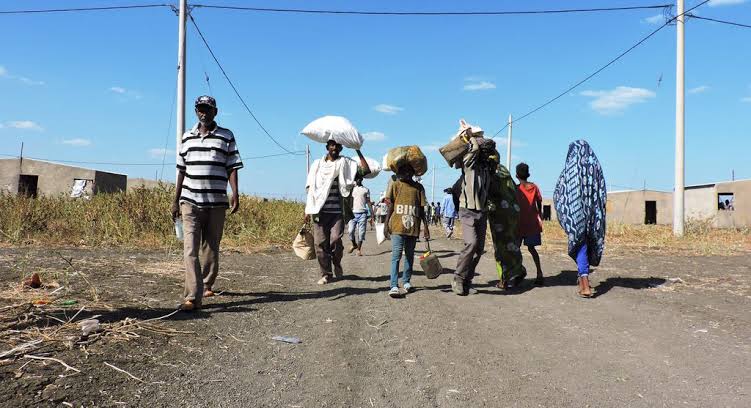
DJIBOUTI — Djibouti is facing fresh humanitarian and security pressure after around 1,400 Yemenis arrived in the country within 24 hours, fleeing escalating fighting in Yemen and growing Houthi activity around the strategic city of Marib.
The arrivals crossed the Bab al-Mandeb strait, a vital maritime passage linking the Red Sea with the Gulf of Aden. The narrow waterway has become increasingly sensitive as the conflict in Yemen intensifies and regional military activity grows.
Djibouti, located on the western side of the strait, has become an important destination for Yemenis fleeing the conflict. The coastal town of Obock has previously received hundreds of Yemenis who crossed the sea, including people rescued after boats ran out of fuel.
The latest influx comes as the security situation in Yemen deteriorates and displacement rises. The International Organization for Migration has said nearly 76,000 people have been displaced by the conflict in Yemen since July, highlighting the growing humanitarian needs facing communities inside Yemen and countries receiving those fleeing the violence.
Djibouti has previously hosted more than 36,000 refugees and asylum seekers, including Somalis, Ethiopians and Yemenis. The new arrivals are likely to increase pressure on accommodation, food supplies, healthcare and other basic services.
The developments are also significant for Somalia, which shares a long coastline along the Gulf of Aden. The Bab al-Mandeb strait lies close to Somalia’s northern coast and is a major route for commercial shipping between Asia, the Middle East and Europe.
Any further escalation around the strait could increase security risks and maritime transport costs across the region. The waterway is one of the world’s key shipping chokepoints, linking the Indian Ocean with the Red Sea and the Suez Canal route to Europe.
Somalia and Djibouti are therefore closely monitoring developments around the Bab al-Mandeb as the conflict in Yemen continues to evolve. A prolonged deterioration in security could have consequences beyond Yemen, affecting regional migration, maritime trade and the security of coastal states around the Gulf of Aden and Red Sea.
For Djibouti, which already plays a major role in regional maritime trade and hosts large refugee populations, the continued arrival of Yemenis represents a new humanitarian challenge at a time of heightened security concerns across the Red Sea region.