

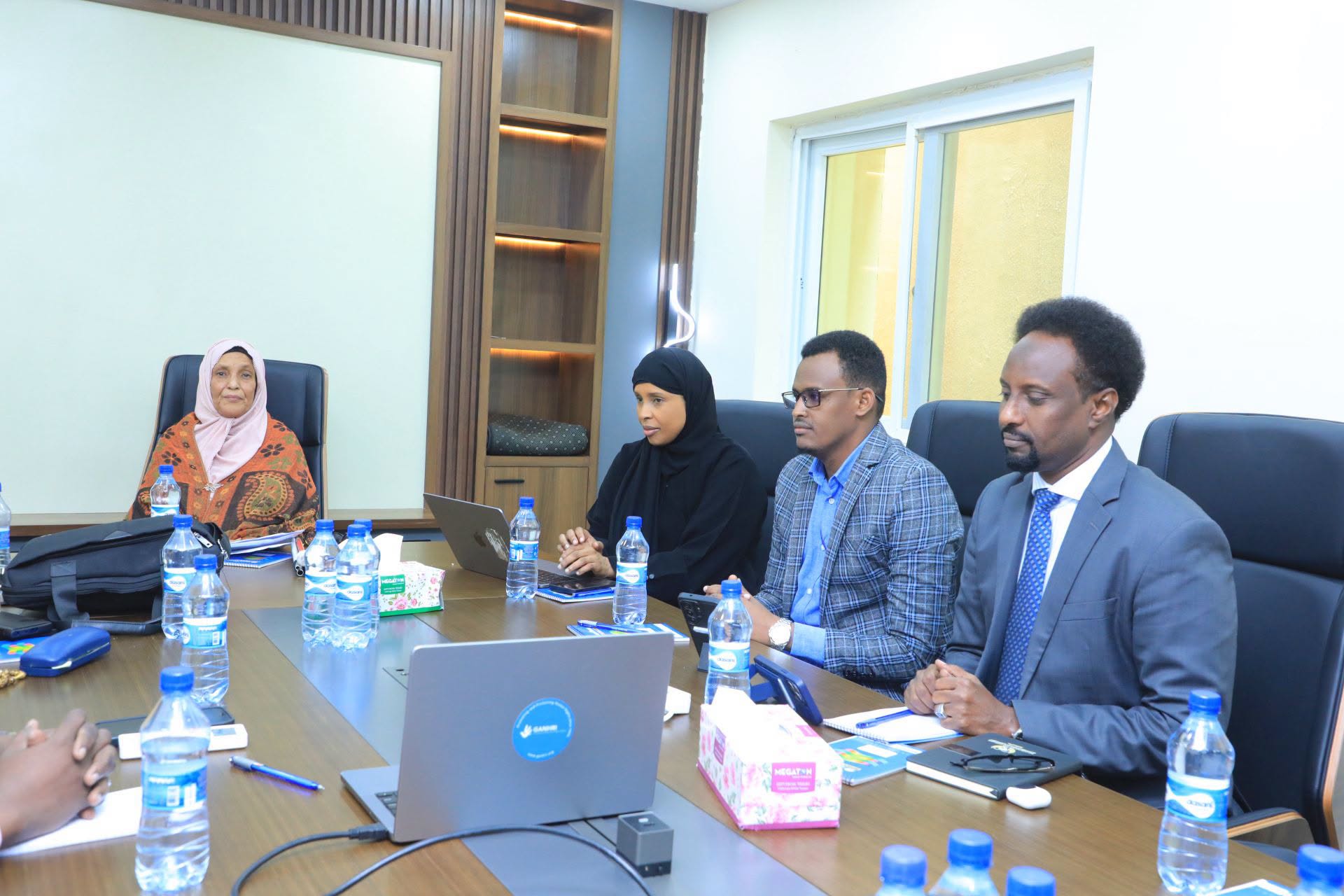
MOGADISHU, Somalia — Somalia’s National Independent Human Rights Commission held a meeting in Mogadishu on Monday to review the country’s human rights situation and accelerate priority activities aimed at strengthening its mandate to protect and promote human rights.
The meeting was chaired by Commission President Dr. Maryan Qasim Ahmed, who urged members to work collectively, independently and transparently in carrying out the institution’s national responsibilities.
Commission members discussed the overall state of human rights in Somalia and ways to strengthen the body’s role in monitoring, protecting and promoting fundamental rights.
Particular attention was given to access to justice, the protection of vulnerable groups, the follow-up of complaints and monitoring incidents involving alleged human rights violations.
The commission also reviewed work already completed, the progress of its current plans and activities scheduled for the coming period.
Members discussed measures to accelerate priority programmes, complete the commission’s internal procedures and regulations, and strengthen cooperation with government institutions, civil society organisations and international partners.
The meeting comes as Somalia continues efforts to strengthen national institutions responsible for promoting human rights and ensuring greater access to justice.
The commission said regular monitoring of the human rights situation would remain a key priority, particularly in responding to emerging issues requiring its attention.
Maryan Qasim stressed the importance of ensuring that the commission carries out its mandate while preserving its independence, impartiality and public credibility.
The members agreed on the need for continued assessment of developments affecting human rights across the country and for timely responses to emerging concerns.
They also emphasised the importance of maintaining cooperation with relevant government bodies, civil society groups and international organisations while ensuring that the commission remains independent in its work.
The commission is responsible for monitoring human rights conditions, receiving and following up on complaints and advocating for the protection and promotion of human rights in Somalia.
Its work includes drawing attention to issues affecting vulnerable communities and supporting efforts to strengthen justice and accountability.
The meeting concluded with members reaffirming their commitment to carrying out the commission’s mandate in a coordinated and transparent manner.
They agreed that protecting the institution’s independence and neutrality would be essential to maintaining public confidence and ensuring that human rights concerns are addressed effectively.
Somalia has faced significant human rights challenges linked to insecurity, displacement, access to justice and the protection of civilians. The country’s ongoing security situation has also placed additional pressure on institutions tasked with monitoring rights and ensuring accountability.
The commission said it would continue monitoring the national human rights situation and responding to issues that fall within its mandate, while working with relevant stakeholders to strengthen protections and promote respect for fundamental rights.