


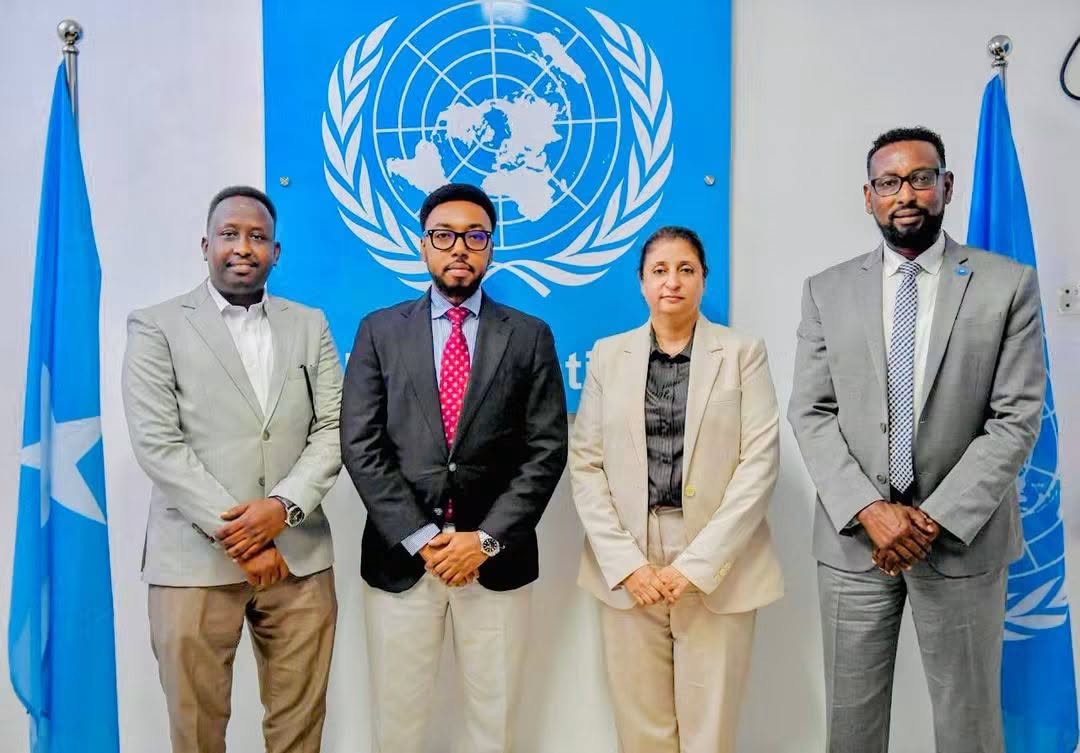
MOGADISHU, Somalia — Somalia’s Director General of the Ministry of Transport and Civil Aviation, Omar Afrah, has held talks with Sadozai, Acting Assistant Secretary-General of the United Nations and head of the United Nations Support Office in Somalia (UNSOS), on strengthening cooperation in the country’s civil aviation sector.
The meeting focused on improving coordination between the ministry and the United Nations, with particular attention to technical assistance and efforts to strengthen Somalia’s institutional capacity in civil aviation.
The two sides also discussed measures to improve the safety and security of Somalia’s airports, including the development of aviation systems, technical capabilities and related services.
A key issue raised during the meeting was Somalia’s ongoing transition period and the need for coordinated planning to ensure that Somali authorities can effectively assume responsibilities related to aviation operations and technical support.
The discussions come as Somalia works to strengthen its national institutions and gradually take greater responsibility for functions that have historically relied on international support.
Afrah thanked the United Nations for its continued assistance to Somalia and stressed the importance of maintaining and expanding cooperation during the transition.
He highlighted the need for further support in building the capacity of Somali institutions, improving aviation safety, upgrading airports and developing a sustainable aviation system that meets international standards.
The Ministry of Transport and Civil Aviation has been working with international partners to improve the country’s aviation infrastructure and regulatory capacity as Somalia seeks to strengthen oversight of its airspace and airports.
Airport security and aviation safety remain key priorities for Somalia, particularly as the country seeks to expand air connectivity and attract greater commercial activity.
The United Nations has provided technical and institutional support to Somalia through various programmes, including assistance to strengthen government institutions and critical infrastructure.
The transition discussed during the meeting is also part of wider efforts to increase Somali ownership of national responsibilities as international missions and support arrangements evolve.
For Somalia’s aviation sector, officials say the transition will require sustained technical expertise, investment in airport infrastructure and stronger national institutions capable of meeting international aviation requirements.
The meeting between Afrah and the UNSOS chief underscored the importance of maintaining close cooperation during this period, particularly in areas where Somalia continues to rely on international technical assistance.
The Somali government has increasingly emphasised the need for national institutions to develop the capacity to independently manage key sectors while maintaining partnerships with international organisations.
Officials said continued cooperation with the United Nations would be important in ensuring a smooth transition and supporting the development of a modern and sustainable civil aviation system.
The talks also reflect broader efforts to improve Somalia’s transport infrastructure and strengthen the regulatory and operational systems needed to support economic development.
Somalia has a strategic location along major air and maritime routes linking Africa, the Middle East and Asia. Improving aviation safety and airport infrastructure is therefore seen as important not only for passenger travel but also for trade, investment and wider economic integration.
Afrah reiterated Somalia’s commitment to working with international partners to build a stronger aviation sector and ensure that the country’s airports and aviation services operate in line with internationally recognised safety standards.